

Hangar Types and Sizes: T-Hangar, Box, Corporate
Before you rent, buy or build, you need the right size and type of hangar for your aircraft. Here is how the main hangar types compare, and how to size one to your aircraft.
The three main aircraft hangar types are the T-hangar (an interlocking shape that suits single small aircraft economically), the box or clear-span hangar (a rectangular space for one or more aircraft with flexible layout), and the corporate or jet hangar (large, tall-door space for business jets and turboprops). The right choice is set by your aircraft’s wingspan, height and tail height, plus the door width and height needed to move it in and out.
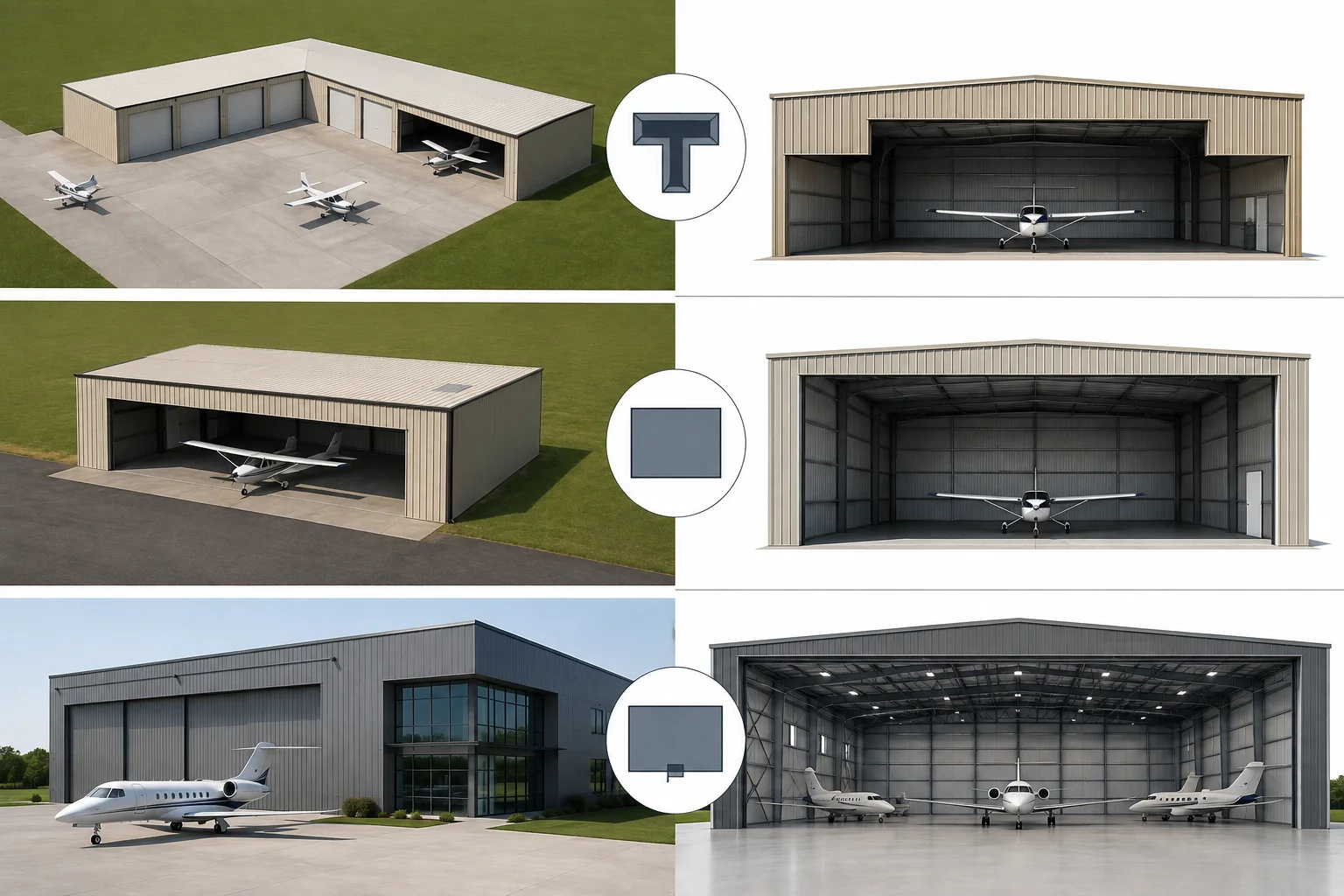
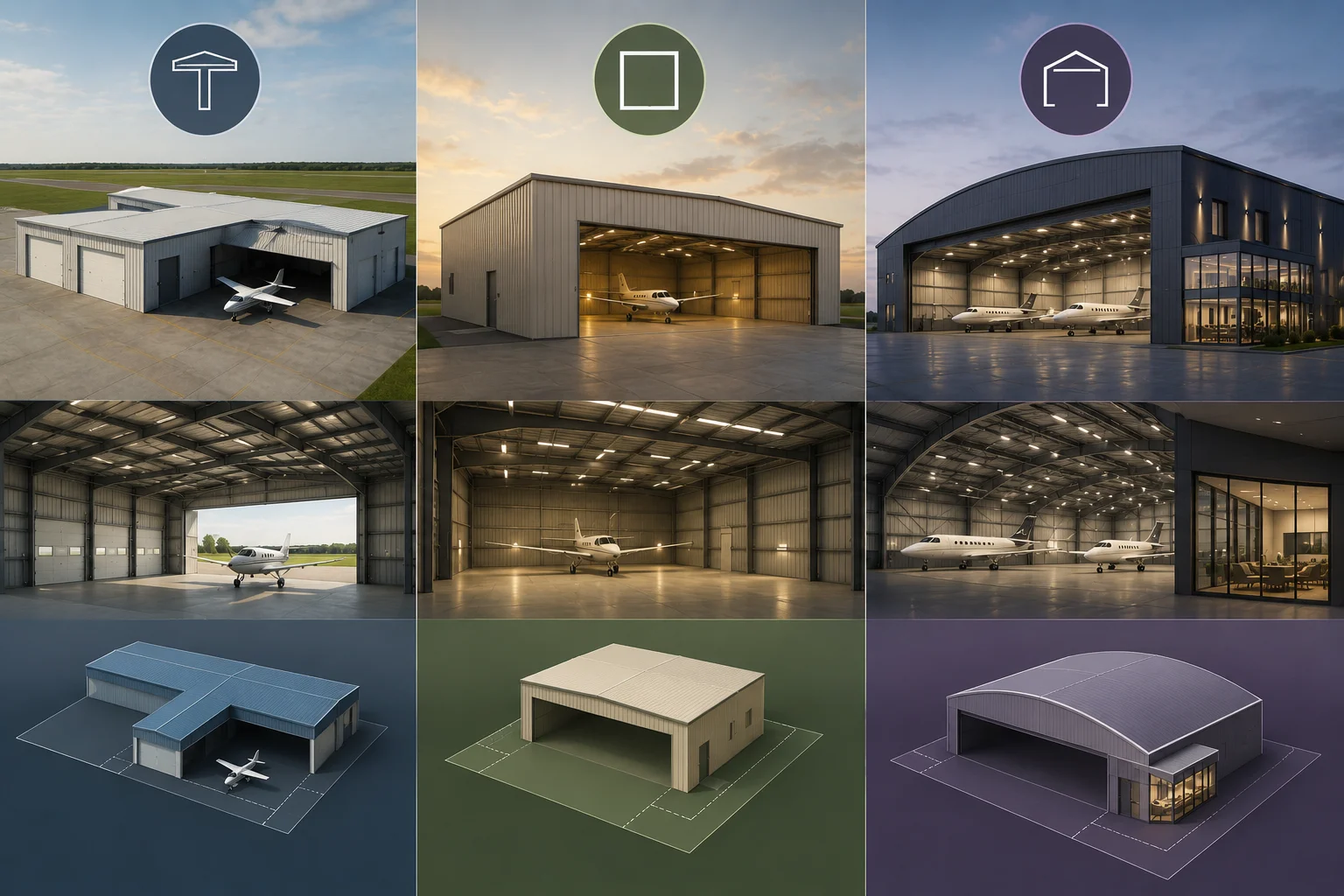
The main hangar types
| Type | Best for | Notes |
|---|---|---|
| T-hangar | Single small piston aircraft | Interlocking ‘T’ shape uses space efficiently; the most economical option |
| Box / clear-span | One or more aircraft, flexible use | Rectangular open span; easier to maneuver and share; good for larger singles/twins |
| Corporate / jet | Business jets, turboprops | Large footprint and tall doors; room for ground equipment and service |
How to size a hangar to your aircraft
- 1
Wingspan
The hangar (and door opening) must clear your wingspan with margin.
- 2
Tail height
The door and interior must clear the vertical stabilizer; this often governs jet hangars.
- 3
Length
Nose-to-tail plus room to position and secure the aircraft.
- 4
Door width and height
The true limiting factor for getting the aircraft in and out.
- 5
Extras
Space for a tug, tools, ground power or a small office if you need it.
Match the type to your aircraft
- Single-engine piston (e.g. Cessna 172, Cirrus) - usually a T-hangar or small box hangar.
- High-performance singles / light twins - a box hangar for room to maneuver.
- Turboprops and business jets - a corporate/jet hangar with tall clear doors.
Selecting the correct hangar type and size depends on your aircraft model, future ownership plans, and storage requirements. These aircraft ownership resources can help owners understand the wider considerations involved in managing an aircraft.
GFTS offers customizable hangars sized to your aircraft at Immokalee. To price your options, see the Hangar Cost Guide; to buy, lease or store, see Hangar Sales, Hangar Rental and Aircraft Storage.
Frequently Asked Questions
-
What is a T-hangar?
A T-hangar is an interlocking, T-shaped hangar unit that stores a single small aircraft economically by nesting the tail sections of adjacent units together. It’s the most common and affordable option for light aircraft. -
What’s the difference between a box hangar and a T-hangar?
A box (clear-span) hangar is a rectangular open space that’s easier to maneuver in and can hold one or more aircraft; a T-hangar is shaped to fit a single small aircraft as efficiently as possible. -
How do I know what size hangar I need?
Size to your aircraft’s wingspan, tail height and length, and — critically — check the door’s clear width and height. GFTS can help match a customizable hangar to your aircraft. -
What hangar do I need for a jet?
A corporate/jet hangar with a large footprint and tall clear doors to clear the tail. GFTS offers expanded jet-storage capacity at Immokalee.
Talk to GFTS About Your Hangar
GFTS Hangars is based at Immokalee Regional Airport in Southwest Florida, 35-40 miles inland far enough from the coast to reduce the salt-air corrosion that shortens aircraft and airframe life. Whether you want to buy, lease, or store an aircraft, we offer secure, customizable hangar space and local expertise across the Gulf Coast.